
INDEX HOME
|
INDEX HOME |
| Australia's Kakadu National Park 4 |
|---|
Laurie Lubeck |
|
LL: Do your tour groups have the opportunity to interact or learn from
local Aboriginal people? HK: "If we think a moment about Japanese education in school concerning
minorities, almost nothing is taught. I've heard in America you have a lot
of minority education. In many places, the Japanese traveler perceives minorities
as something interesting and separate, almost like an object of curiosity.
Ours was a special tour group. They were not afraid at all to ask questions
and spend time in discussion. They had a lot of interest about how Aboriginal
people co-exist with nature and about the stories that they tell of their
traditions and spiritual ancestors. We were fortunate, an Aboriginal friend
of Kenji-san's explained to us about bush tucker, the traditional foods." 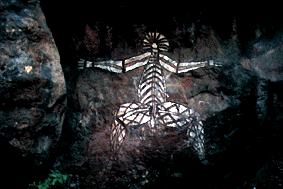 Nature Interpretation tells a story (Nowrlangie Rock) Hidetoshi Kobayashi uncovered one of the secret benefits of ecotours.
Having learned some methods of birdwatching from Mr. Torikai, a specialist
on one of his trips to Kakadu, he returned home and purchased a set of binoculars
and went birdwatching along the Tamagawa River. |